

High-Mileage Chevy Service: What Your Chevrolet Needs at 75,000, 100,000, and 150,000 Miles
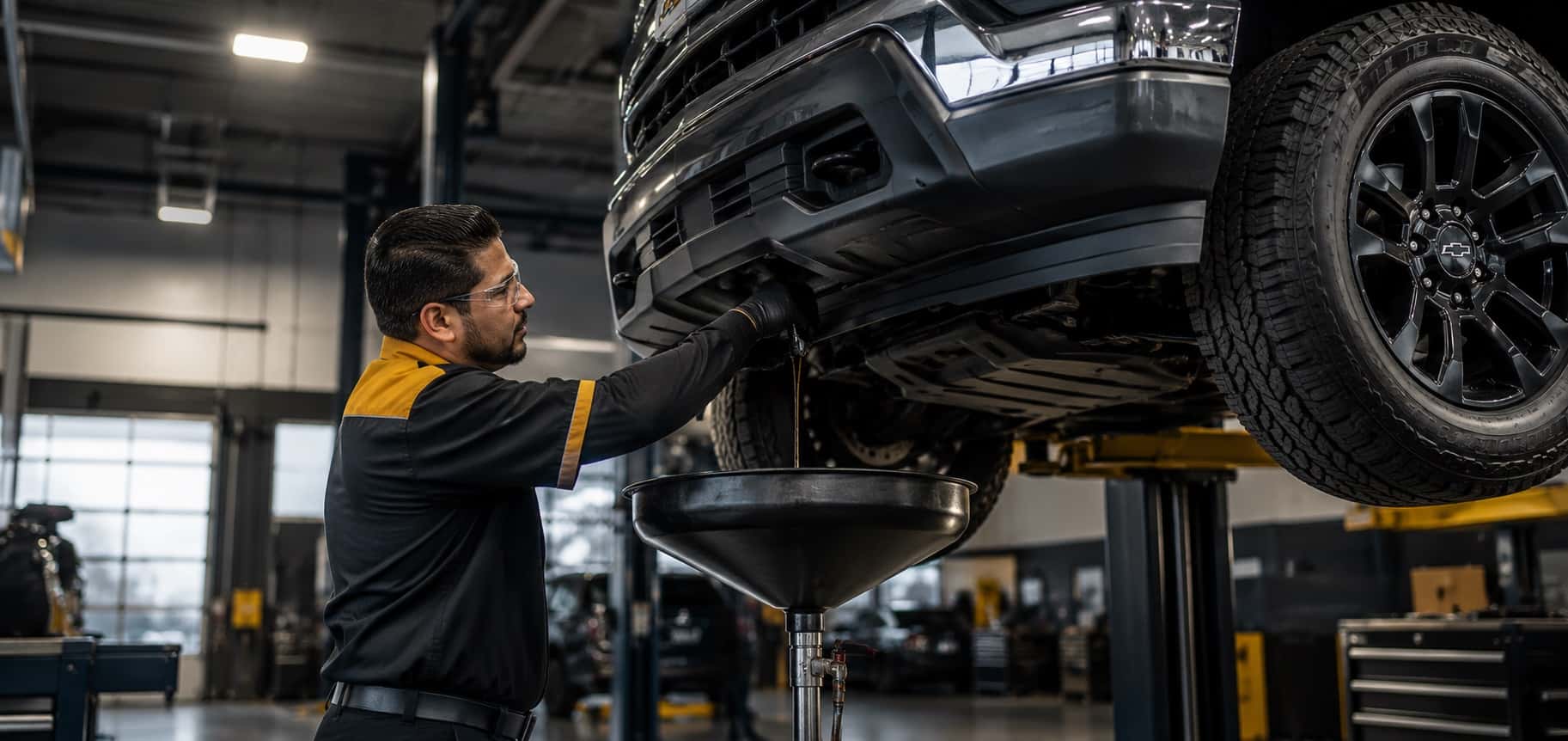
Crossing 75,000 miles changes the conversation about your Chevrolet. Up to that point, maintenance is mostly oil, filters, and tire rotations. After it, you start reaching the service intervals for components that have been quietly doing their job since the vehicle was new — fluids that have never been changed, belts and hoses that have been heat-cycled thousands of times, and suspension parts that have absorbed every pothole on Cicero Avenue. None of it is alarming, but the vehicles that make it comfortably past 200,000 miles are almost always the ones whose owners treated these milestones as real checkpoints instead of suggestions. Here is what Oak Lawn, IL drivers should be thinking about at each stage, and how to plan for it without getting blindsided.
What Counts as High Mileage for a Modern Chevrolet?
The old “100,000 miles and it’s done” rule stopped being true a long time ago — a well-maintained modern Chevrolet routinely runs well past 200,000 miles. What actually changes after roughly 75,000 miles is the type of maintenance involved: you shift from consumables like oil and filters toward longer-interval items like fluids, belts, and wear components. Treating that shift as a planned phase rather than a series of surprises is the whole point.
- Under 75,000 miles: mostly oil, filters, tires, and inspections.
- 75,000–150,000 miles: long-interval fluids, belts, hoses, and wear-item replacement.
- 150,000+ miles: closer monitoring of suspension, cooling, and accessory components.
- Condition matters more than the odometer — maintenance history and driving conditions drive the real timeline.
What Does Your Chevy Need Around 75,000 Miles?
The 75,000-mile mark is typically the first checkpoint where longer-interval items start coming due together, most commonly transmission fluid, coolant, brake fluid, and a thorough inspection of belts, hoses, and suspension components. This is also the point where a technician can spot early wear while it is still inexpensive to address. Specific intervals vary by model, engine, and model year, so check your owner’s manual or ask your service advisor to confirm what applies to your vehicle.
- Transmission fluid service, where the maintenance schedule calls for it.
- Coolant condition check and service per the interval for your powertrain.
- Brake fluid inspection and replacement, since fluid absorbs moisture over time.
- Belt, hose, and accessory drive inspection for cracking or glazing.
- Suspension and steering inspection — bushings, struts, and linkage.
- Spark plugs on some engines, though intervals vary widely by powertrain.
What Happens at the 100,000-Mile Service Milestone?
At 100,000 miles, the priorities are the items designed to last roughly that long: spark plugs on many engines, coolant if it was not done earlier, and a genuinely thorough inspection of the cooling, charging, and suspension systems. This is the checkpoint where deferred maintenance from earlier intervals tends to surface, which is why it feels like a bigger visit than it strictly needs to be. Staying current at 75,000 makes 100,000 far less eventful.
- Spark plugs — interval depends heavily on engine and plug type.
- Cooling system — coolant condition, hoses, thermostat, and radiator inspection.
- Charging system — battery, alternator output, and cable condition.
- Suspension — struts and shocks, which wear gradually enough that most drivers never notice.
- Brake hardware — not just pads and rotors, but calipers, slides, and hoses.
- Full diagnostic scan for stored and pending codes that have not triggered a dashboard light.
What Should You Expect at 150,000 Miles and Beyond?
Past 150,000 miles, the emphasis shifts from scheduled replacement to active monitoring — catching components in early failure rather than waiting for them to strand you. Most vehicles at this stage do not need everything replaced at once; they need someone looking carefully at the right things on a regular cadence. A twice-yearly thorough inspection becomes more valuable than any single service item.
- Regular inspection of the cooling system, since overheating causes the most expensive secondary damage.
- Monitoring for fluid seepage at seals and gaskets before it becomes an actual leak.
- Suspension and steering checks, which affect both tire wear and ride quality.
- Exhaust and undercarriage inspection, especially with Chicago-area road salt exposure.
- Attention to any new noise, vibration, or change in behavior — these are the early warnings.
Which Fluids Matter Most on a High-Mileage Chevy?
Transmission fluid and coolant are the two that cause the most expensive damage when neglected, followed closely by brake fluid, which quietly absorbs moisture and degrades braking performance over time. Engine oil gets all the attention because it is changed most often, but the long-interval fluids are the ones that actually decide whether a vehicle reaches 200,000 miles. Because specifications differ by transmission and engine, using the correct fluid for your specific vehicle matters as much as changing it on time.
- Transmission fluid: the single most consequential long-interval fluid on most vehicles.
- Coolant: loses its corrosion inhibitors over time, even when it still looks fine.
- Brake fluid: absorbs moisture, which lowers its boiling point and affects pedal feel.
- Differential and transfer case fluid on AWD and 4WD models.
- Power steering fluid where applicable to your vehicle’s system.
Why Do High-Mileage Service Recommendations Vary So Much?
Two Chevrolets with identical odometer readings can need very different work, because maintenance intervals depend on engine, transmission, drivetrain, and — critically — how the vehicle has been driven and maintained. A highway-driven vehicle with complete service records is in a different position than a short-trip city vehicle with gaps in its history. This is exactly why a documented inspection matters more than a generic mileage chart.
- Powertrain differences: intervals for a turbocharged four-cylinder differ from a V8.
- Driving pattern: short trips and stop-and-go are harder on fluids than steady highway miles.
- Maintenance history: deferred items compound and shift everything forward.
- Climate: Chicago winters and road salt accelerate corrosion-related wear.
- Towing or heavy loads: most schedules list separate, shorter intervals for severe use.
How Does Chicago-Area Driving Change the Timeline?
Oak Lawn and the surrounding southwest suburbs put vehicles squarely in the “severe service” category that most maintenance schedules describe separately: short trips, stop-and-go traffic, temperature extremes, and heavy winter road salt. Many owners do not realize their normal commute qualifies, and they follow the normal-use column when the severe-use column actually applies. If your driving is mostly short hops on surface streets, assume the shorter intervals.
How Do You Get an Accurate Estimate Before Work Begins?
Ask for a written estimate after an inspection — not before — because any number quoted without a technician looking at your specific vehicle is a guess. A proper high-mileage inspection produces a prioritized list of what is due now, what is approaching, and what can wait, and that list is what a meaningful estimate is built from. You should never feel obligated to authorize everything at once.
- Request a multi-point inspection before any estimate is prepared.
- Ask for findings to be grouped as urgent, recommended, and monitor.
- Get the estimate in writing before authorizing work.
- Ask which items are safety-related and which are preventive.
- Confirm whether genuine GM parts are being used.
How Should You Prioritize If Several Items Are Due at Once?
Safety first, then anything that can cause cascading damage, then everything else. Brakes, tires, and steering come before a fluid service; a cooling system problem comes before a cosmetic one, because overheating damages far more than the part that failed. A good service advisor will help you sequence the list across two or three visits rather than pushing all of it into one.
- First: brakes, tires, steering, and lighting — anything safety-critical.
- Second: cooling and lubrication issues that can cause secondary damage.
- Third: scheduled long-interval fluids and wear items.
- Fourth: comfort, convenience, and cosmetic items.
Is High-Mileage Service Worth It on an Older Vehicle?
In most cases yes, because the cost of staying current on maintenance is generally far lower than the cost of a major failure plus the value of the transportation you lose while it is being fixed. The calculation shifts only when a vehicle needs a repair approaching its overall value and has other significant issues pending. A candid inspection gives you the information to make that call rather than guessing.
Quick Overview: Chevy High-Mileage Service Milestones
| Milestone | Primary Focus | Commonly Due |
|---|---|---|
| 75,000 mi | First long-interval checkpoint | Transmission fluid, coolant, brake fluid, belts |
| 100,000 mi | Major systems service | Spark plugs, cooling system, suspension, charging |
| 125,000 mi | Wear-item cycle | Brake hardware, struts, hoses, filters |
| 150,000+ mi | Active monitoring | Cooling, seals, undercarriage, suspension |
Intervals vary by engine, transmission, drivetrain, and model year. Always confirm the schedule that applies to your specific Chevrolet.
How to Schedule High-Mileage Service at Webb Chevy Oak Lawn
- Check your odometer against the maintenance schedule in your owner’s manual.
- Determine whether you fall under severe-use intervals — most Chicago-area commuting does.
- Gather your service history so the technician knows what has already been done.
- Write down any symptoms — noises, vibrations, changes in shifting or braking.
- Book an inspection first through the Webb Chevy Oak Lawn service department, or call (708) 423-9466.
- Request a prioritized written estimate grouped as urgent, recommended, and monitor.
- Sequence the work across multiple visits if needed — safety items first.
Key Takeaways
- High mileage on a modern Chevrolet is a maintenance phase, not an expiration date — well-kept vehicles routinely pass 200,000 miles.
- 75,000 miles is typically the first checkpoint where long-interval fluids and inspections come due together.
- 100,000 miles centers on spark plugs, the cooling system, suspension, and charging — and on anything deferred earlier.
- Past 150,000 miles, regular inspection matters more than any single scheduled replacement.
- Transmission fluid and coolant cause the most expensive damage when neglected.
- Most Chicago-area commuting qualifies as severe use, which means shorter intervals than the standard column.
- Always get a written estimate after an inspection, with findings prioritized so you can sequence the work.
Frequently Asked Questions
Is 100,000 miles too many for a Chevrolet?
Not at all. A modern Chevrolet that has been maintained on schedule commonly runs well beyond 200,000 miles. What matters far more than the odometer reading is the maintenance history and the current condition of the major systems, which an inspection can establish quickly.
Do I really need a transmission fluid service?
If your maintenance schedule calls for it at your mileage, yes — transmission fluid degrades with heat and use, and neglecting it is one of the more expensive mistakes a high-mileage owner can make. Intervals and fluid specifications differ significantly by transmission, so confirm what your specific vehicle requires rather than following a general rule.
Does my Oak Lawn commute count as severe-use driving?
Frequently, yes. Most maintenance schedules define severe use to include short trips, extensive stop-and-go driving, temperature extremes, and heavy road-salt exposure — which describes a great deal of southwest-suburban Chicago driving. If that matches your routine, follow the shorter severe-use intervals.
Can I spread high-mileage service across several visits?
Yes, and it is often the sensible approach. Ask your service advisor to prioritize the inspection findings so safety-related items and anything that could cause cascading damage are handled first, with preventive maintenance scheduled across later visits.
Why does GM-certified service matter on an older Chevrolet?
Factory diagnostic tools read manufacturer-specific codes that generic scanners cannot, and technicians trained on your powertrain know the patterns that show up on higher-mileage vehicles. On an older vehicle, where symptoms are often subtle and overlapping, that diagnostic accuracy is worth more than it is on a new one.
Hitting a milestone on the odometer? Start with an inspection and a clear, prioritized plan.

0 comment(s) so far on High-Mileage Chevy Service: What Your Chevrolet Needs at 75,000, 100,000, and 150,000 Miles