

Tire Wear in Chicago: When Should You Replace Your Chevy Tires?
Tire Wear in Chicago: When Should You Replace Your Chevy Tires?
Chicago’s winters, potholes, and stop-and-go traffic are hard on tires. Here’s exactly what to look for — and when to act — so you’re never caught off guard on Chicagoland roads.
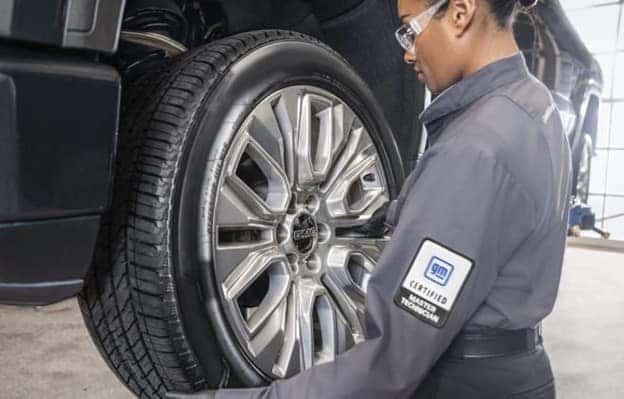
Our GM-certified technicians will inspect and replace your tires same-day.
Drivers in Oak Lawn and across Chicagoland face some of the most demanding driving conditions in the country: lake-effect snow, spring freeze-thaw potholes, humid summers, and heavy expressway traffic. All of that adds up on your tires faster than in most other regions.
At Webb Chevy Oak Lawn Service Center, our team of GM-certified technicians regularly inspects and replaces tires for Chevy owners throughout the South Side, Oak Lawn, and surrounding suburbs. Knowing when to replace your tires — rather than waiting until something goes wrong — keeps you, your passengers, and everyone else on the road safer.
⚠ Chicago Road Reality
Chicago’s freeze-thaw cycle creates some of the worst pothole conditions in the U.S., and they accelerate structural tire damage — especially sidewall stress — beyond normal tread wear rates.
What Are the Signs It’s Time to Replace Your Chevy Tires?
1. Visible Damage to the Tire Structure
If you can see bulging, cracking, deep cuts, or irregular texture on the sidewall or tread face, that tire is at immediate blowout risk. This kind of structural damage is non-repairable — schedule an inspection as soon as you notice it.
2. Tread Depth at or Below 2/32″
Your tire’s tread channels are what push water away from the contact patch and keep grip on wet or icy pavement. Once tread depth drops to 2/32 of an inch, you’re at the legal minimum — and traction is already compromised well before that point in Chicago winter conditions.
How to measure without a gauge — the Penny Test:
- Place a penny into your tire’s tread groove with Lincoln’s head pointing down.
- If the top of Lincoln’s head is visible above the tread, your depth is below 2/32″ — replace immediately.
- For an earlier warning, use a quarter instead: if Washington’s head is fully visible, you’re below 4/32″ — start shopping now.
💡 Pro Tip
In Chicagoland’s winter conditions, many safety experts recommend replacing tires at 4/32″ — not just 2/32″ — to maintain meaningful grip on snow and ice. The penny test alone won’t catch this earlier threshold; a tread depth gauge gives you the exact number.
3. Tires Are More Than 6–10 Years Old
Even tires with healthy-looking tread degrade over time. Rubber oxidizes, compounds break down, and the structural integrity weakens — all of which accelerate in Chicago’s heat-cold extremes. If your tires are approaching 6 years old, check the DOT date code on the sidewall (the last four digits indicate the week and year of manufacture). If you can’t read it, our service team can check during an inspection.
4. Persistent Low Tire Pressure
If you’re adding air to the same tire more than once a month, there’s likely a slow leak — either from a nail, a damaged valve stem, or a compromised bead seal. Some leaks are repairable; others are not. Bring it in for a diagnosis before a slow leak becomes a flat on the expressway.
5. Excessive Vibration on Smooth Roads
Some road vibration is normal on Chicago’s uneven pavement. But if you’re feeling persistent shaking through the steering wheel or seat on relatively smooth stretches, your tires may be damaged internally, out of balance, or developing uneven wear — all of which signal it’s time for an inspection.
Quick Reference: Tire Condition at a Glance
Use this table as a first-pass guide. A visual inspection or technician check can confirm what to do next.
| Condition | What It Means | Action |
|---|---|---|
| Tread depth ≥ 4/32″ | Safe for most conditions | ✓ Good — Monitor |
| Tread depth 2–4/32″ | Reduced wet & winter grip | ⚡ Plan replacement soon |
| Tread depth ≤ 2/32″ | Legal minimum — dangerous on wet roads | ✕ Replace immediately |
| Bulging or cracking | Structural damage — blowout risk | ✕ Replace immediately |
| Tire age 6–10 years | Rubber degradation, even if tread looks fine | ⚡ Inspect & plan replacement |
| Tire age > 10 years | Significant structural risk regardless of tread | ✕ Replace regardless of appearance |
| Slow leak / recurring low pressure | Possible nail, valve, or bead damage | ⚡ Inspect — may be repairable |
| Unusual vibration | Possible internal damage or imbalance | ⚡ Inspect promptly |
How to Check Your Chevy’s Tire Condition at Home
-
Check tread depth with the penny test
Insert a penny (Lincoln head-down) into the deepest groove on the tire’s centerline. If Lincoln’s full head is visible, tread is below 2/32″ — replace now. Repeat at several spots around the tire, as uneven wear matters too. -
Visually inspect the sidewall and tread face
Look for bulges, cracks, cuts, embedded objects (nails, screws), or uneven wear patterns. Any sidewall bulge warrants immediate replacement — no exceptions. -
Find the DOT date code on the sidewall
The last four digits after “DOT” on the sidewall show the manufacture date. For example, “1823” means the 18th week of 2023. Tires over six years old should be professionally assessed; over 10 years should be replaced. -
Check tire pressure when the tires are cold
Use an inexpensive pressure gauge and match the PSI to the number on the sticker inside your driver-side door — not the number molded into the tire sidewall (that’s max pressure, not recommended). Check monthly and after major temperature swings. -
If anything looks off, schedule a professional inspection
Not all tire damage is visible to the untrained eye. If you noticed any of the warning signs above, bring your Chevy in to Webb Chevy Oak Lawn Service Center for a complete tire inspection from a GM-certified technician.
What Tires Should You Choose for Your Chevy in Chicago?
Your Chevrolet was engineered with specific tire size and load ratings in mind. Installing the wrong size can affect handling, speedometer accuracy, ADAS calibration, and safety systems. Confirm the correct specs in your owner’s manual or on the door sticker before shopping.
The most popular choice for Chicagoland. Designed for reliable traction in rain, light snow, and warm weather — a practical year-round option for most commuters.
Prioritize ride comfort and low road noise for everyday passenger vehicles. Available in all-season compounds suited for Chicago’s varied conditions.
Offer a step up in handling response and highway stability over standard passenger tires, while maintaining all-season traction. Good for performance-oriented Chevy models.
Purpose-built for temperatures below 45°F with specialized rubber compounds and aggressive tread. Most effective November through March in Chicago — remove them in spring to prevent accelerated wear.
💡 Worth Knowing
All-season tires handle Chicago winters adequately for most drivers, but if you regularly drive in heavy snow or icy conditions (or park outdoors overnight), a dedicated winter tire set provides meaningfully better grip. The difference is most noticeable during sudden stops and emergency maneuvers — exactly when it matters most.
Key Takeaways
- Replace tires at 2/32″ tread depth or less — in Chicago winter conditions, consider acting at 4/32″.
- Use the penny test as a quick check; a tread depth gauge is more accurate.
- Visible bulges or cracking = replace immediately, no exceptions.
- Tires older than 6–10 years should be inspected regardless of how they look.
- Persistent slow leaks should be professionally assessed — some are repairable, some aren’t.
- Always match tire size to your owner’s manual or door sticker specs.
- All-season tires suit most Chicagoland drivers; winter tires offer additional safety in heavy snow and ice.
Frequently Asked Questions About Tire Replacement
Do all four tires need to be replaced at the same time?
How long do tires typically last in Chicago conditions?
How do I know when to add air to my tires?
Are winter tires really necessary in Chicago?
Why choose Webb Chevy Oak Lawn for tire service?
Time to Replace Your Chevy Tires?
Our GM-certified technicians at Webb Chevy Oak Lawn will inspect your tires and recommend the right replacement — no pressure, just honest service.
Conclusion
I’ve seen how quickly Chicagoland roads can punish a set of tires — one bad pothole season can accelerate wear that normally takes years, and the city’s freeze-thaw cycle does a number on sidewalls in ways that aren’t always obvious until it’s too late. The honest truth is that tire replacement is one of the most impactful safety decisions a driver can make, and it’s also one of the most easy to postpone until something goes wrong. Don’t wait for that moment.
Whether your tires are showing tread wear, you’re not sure how old they are, or you just want peace of mind before the next Chicago winter sets in, our team at Webb Chevy Oak Lawn Service Center is here to give you a straight answer about what your Chevy actually needs.
📍 Serving Chicagoland
Webb Chevy Oak Lawn proudly serves drivers in Oak Lawn, Chicago’s South Side, West Lawn, Ashburn, Roseland, Pullman, Morgan Park, Beverly, Grand Crossing, Avalon, Mount Greenwood, Evergreen Park, Alsip, Blue Island, and all surrounding Chicagoland neighborhoods.
© Webb Chevrolet Oak Lawn · webbchevroletoaklawn.com · Oak Lawn, IL · GM Mark of Excellence · CARFAX Dealer

0 comment(s) so far on Tire Wear in Chicago: When Should You Replace Your Chevy Tires?